From the blog
Working Out %Daily Value: Each Line of the JellyRock Label, Checked
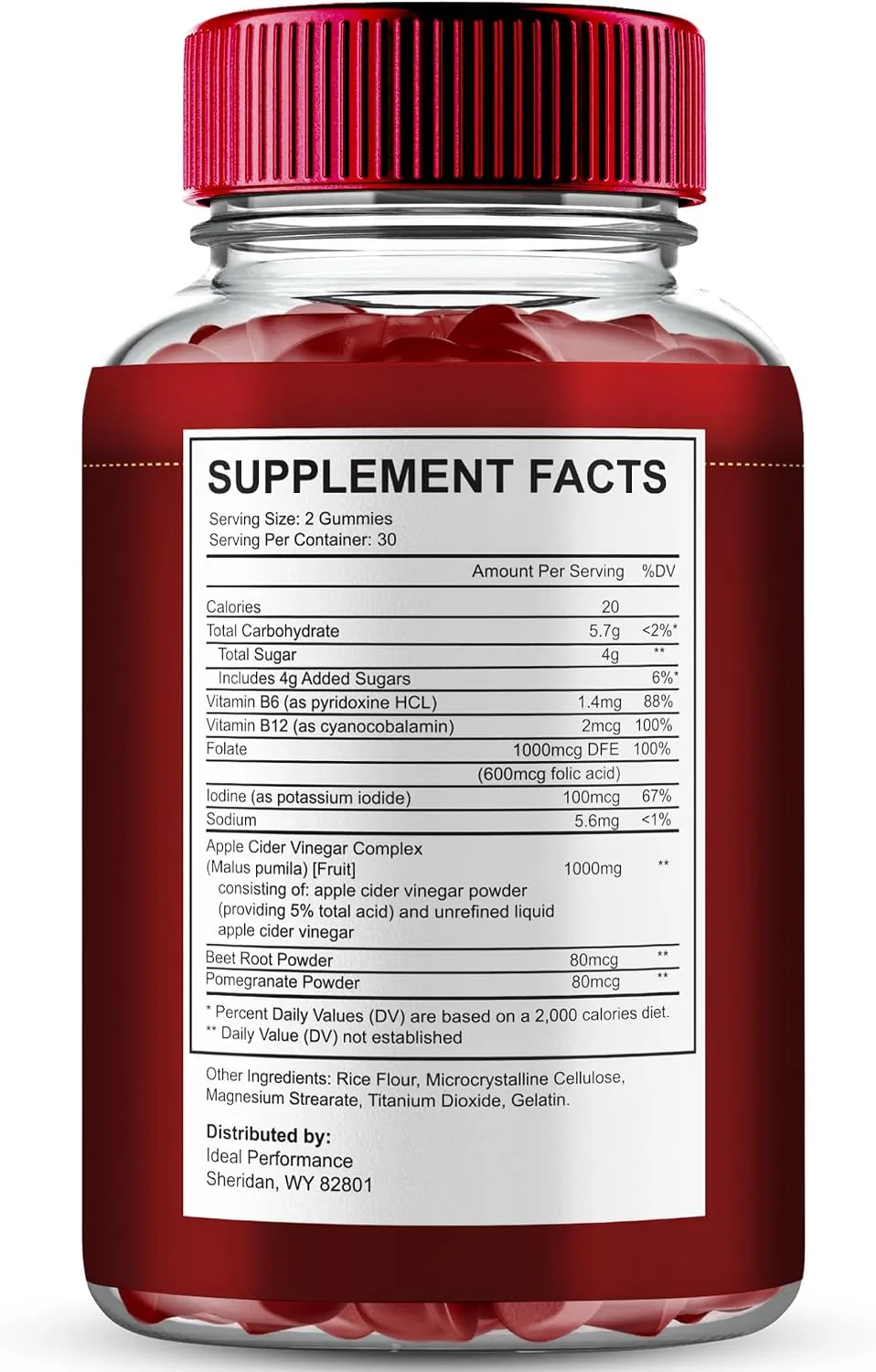
To get %Daily Value, take the amount in a serving, divide it by that nutrient’s FDA Daily Value and multiply by 100. The JellyRock jar prints folate at 100% DV, yet 1,000 mcg DFE over a 400 mcg DFE Daily Value comes to 250%. The printed B6 and B12 figures also run above what the math gives. Iodine, at 67%, is right.
Why the %Daily Value column exists
No part of a supplement label lets you size it up faster than the %Daily Value column. You do not need to know an adult’s vitamin B12 needs; the label has already done that arithmetic and shows what share of a reference amount one serving covers.
That benchmark is the Daily Value (DV), which U.S. Food and Drug Administration rules define. Every nutrient gets a single figure, printed the same way on each Supplement Facts and Nutrition Facts panel, which keeps comparisons between products fair.
Shoppers rely on this column, so an error in it carries real weight. When a %DV is printed too low, the product can seem weaker than it really is. And when the understated nutrient has an upper limit, as folic acid does, a large dose can pass for an everyday one.
The %DV formula
One line of arithmetic: %DV = (serving amount ÷ Daily Value) × 100.
Take a vitamin with a Daily Value of 1.2 mg: a serving holding 1.2 mg is 100% DV, and one holding 0.6 mg is 50%. Labels do round the results, yet rounding shifts a figure only slightly, not by dozens of points.
Beyond that, all you need is the correct Daily Value. Many were revised in the FDA’s 2016 label rule, with labels required to move to the new figures over the years that followed. A few of the old numbers shifted sharply.
| Nutrient | FDA Daily Value today | Older Daily Value |
|---|---|---|
| Vitamin B6 | 1.7 mg | 2 mg |
| Vitamin B12 | 2.4 mcg | 6 mcg |
| Folate | 400 mcg DFE | 400 mcg, stated as folic acid |
| Iodine | 150 mcg | 150 mcg |
| Added sugars | 50 g | None set |
| Sodium | 2,300 mg | 2,400 mg |
Folate and the “DFE” unit
With folate, even the unit is different now, which sets it apart from every other nutrient. Current labels list it in , short for Dietary Folate Equivalents.
Supplements use folic acid, and the body absorbs it more readily than the folate found in food. For that reason, every microgram of folic acid is credited as roughly 1.7 mcg DFE. It explains the wording on the JellyRock panel, “1000mcg DFE (600mcg folic acid)”: multiply 600 by 1.7 and you land near 1,000 (NIH Office of Dietary Supplements, “Folate: Fact Sheet for Health Professionals”).
Folate’s Daily Value is set at 400 mcg DFE. That makes 1,000 mcg DFE equal to 250% of it, rather than 100%.
Checking each line of the JellyRock panel
Below, each line that carries a printed %DV sits beside the figure the formula gives using today’s Daily Values. Use the switch to flip between the two.
- Vitamin B61.4 mg88%differs
- Vitamin B122 mcg100%differs
- Folate1,000 mcg DFE100%differs
- Iodine100 mcg67%agrees
The “Worked out” view is based on today’s FDA Daily Values (U.S. Food and Drug Administration, “Daily Value on the Nutrition and Supplement Facts Labels”): 1.7 mg for B6, 2.4 mcg for B12, 400 mcg DFE for folate and 150 mcg for iodine.
| Line | Amount | Printed %DV | Worked out | Match? |
|---|---|---|---|---|
| Vitamin B6 | 1.4 mg | 88% | 82% | No |
| Vitamin B12 | 2 mcg | 100% | 83% | No |
| Folate | 1,000 mcg DFE | 100% | 250% | No |
| Iodine | 100 mcg | 67% | 67% | Yes |
| Added sugars | 4 g | 6% | 8% | No |
| Sodium | 5.6 mg | <1% | <1% | Yes |
| Total carbohydrate | 5.7 g | <2% | About 2% | Close |
Do the older Daily Values account for it?
Strange %DVs often come from a label still built on the pre-update Daily Values, so we tested that idea as well. Using the older figures, B6 comes to 70% (1.4 ÷ 2) and B12 to 33% (2 ÷ 6), while 600 mcg of folic acid reaches 150% (600 ÷ 400).
The printed figures do not line up with those results either, so an outdated label does not explain the differences. The %DV column seems to have been lifted from a different formula, or filled in without anyone running the numbers.
Why folate deserves the closest look
Most of the differences are minor and lean the “harmless” way. Folate is the exception. Seeing “100%”, a shopper assumes the serving is an ordinary daily amount. The jar actually supplies 600 mcg of folic acid. For folic acid taken from supplements and fortified foods, the upper limit is 1,000 mcg, so one serving uses up 60% of it (NIH Office of Dietary Supplements, “Folate: Fact Sheet for Health Professionals”).
For most adults, that remains inside the safe range. Add a multivitamin carrying 400 mcg of folic acid, though, and you hit the upper limit. A high folic acid intake can also mask the anemia caused by low vitamin B12, a concern that weighs most for older adults.
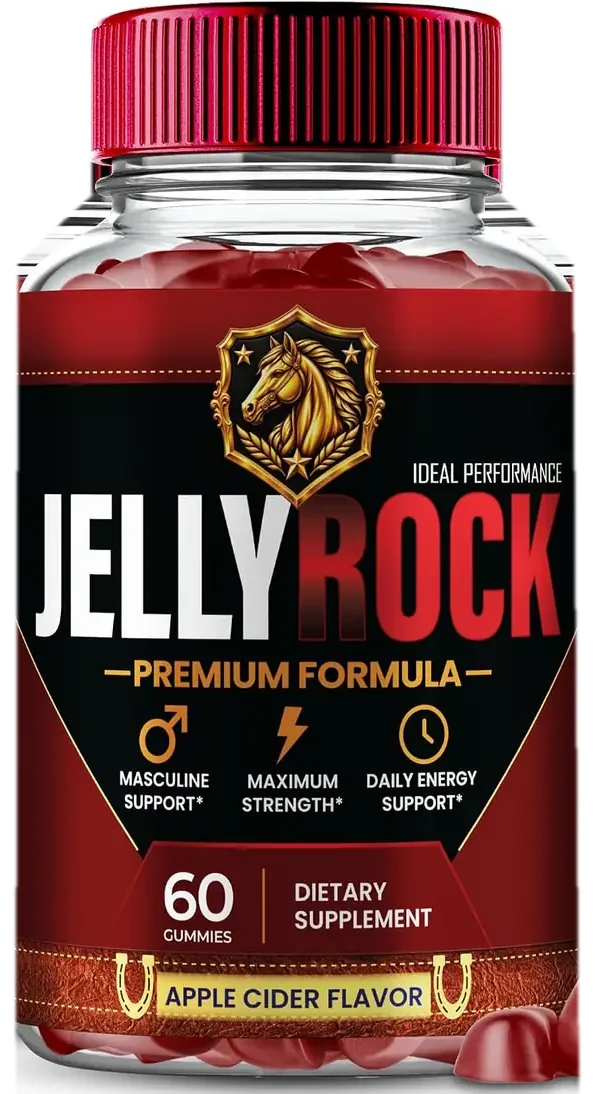
View the complete JellyRock label and pack options.
Check today’s priceWhat the corrected figures say about the formula
Once the %DVs are fixed, the JellyRock label makes more sense. B6 and B12 each land a bit below 100%, about the level of a basic multivitamin. Iodine covers two thirds of what you need in a day, and folate reaches two and a half times its Daily Value.
For someone who gets too little of these nutrients from food, that adds up to a reasonable vitamin top-up (NIH Office of Dietary Supplements, “Vitamin B12: Fact Sheet for Health Professionals”). Despite the wording on the front of the jar, nothing in the formula is built around testosterone or strength.
Checking any label on your own
Note the amount and its unit
Take 1.4 mg as an example.
Find the matching Daily Value
Check the FDA’s published table.
Divide, then scale to a percent
Here: 1.4 ÷ 1.7 × 100 = 82%.
Keep the units straight
mcg, mg and mcg DFE are different units. Confusing them is the leading cause of large errors.
Compare against upper limits
Total your daily intake of B6, zinc, vitamin D, iodine and folic acid, and compare each with its upper limit.
A few more label details to review
- Serving size: every amount listed covers 2 gummies, so a single gummy supplies half.
- Added sugars: the panel counts all 4 g of sugar as added, yet no sugar appears by name among the other ingredients.
- Spelling: “Magnesium Strearate” on the label means “stearate.” A small slip that suggests no one proofread it.
- Distributor: Ideal Performance, Sheridan, WY. In the end, questions about the label belong with them.
The short version
Working out %Daily Value takes nothing more than division, so you can check it yourself. On the JellyRock jar, the iodine and sodium figures hold up; folate reads 100% when the real figure is 250%, and the B6, B12 and added-sugar lines are off too.
For most adults, none of this makes the gummy unsafe. It does mean the amounts matter more than the percentages, and that you should total folic acid across everything you take.
References
- From the FDA (U.S. Food and Drug Administration): Daily Value on the Nutrition and Supplement Facts Labels, in its current revision; last checked September 30, 2026.
- Folate: Fact Sheet for Health Professionals, published by the NIH Office of Dietary Supplements (current ODS revision). Last checked September 30, 2026.
- Vitamin B6: Fact Sheet for Health Professionals, published by the NIH Office of Dietary Supplements (current ODS revision). Last checked September 30, 2026.
- Vitamin B12: Fact Sheet for Health Professionals, published by the NIH Office of Dietary Supplements (current ODS revision). Last checked September 30, 2026.
- Iodine: Fact Sheet for Health Professionals, published by the NIH Office of Dietary Supplements (current ODS revision). Last checked September 30, 2026.
Common questions on this subject
The complete FAQ page has more answers.
What is the math behind %Daily Value?
Serving amount divided by the FDA Daily Value, times 100.
Which Daily Value applies to folate?
It is 400 mcg DFE, so 1,000 mcg DFE equals 250%.
Does JellyRock print the right %DV for folate?
No. The jar shows 100%, while the math gives 250%.
What does DFE stand for?
Dietary Folate Equivalents. Each 1 mcg of folic acid is credited as roughly 1.7 mcg DFE.
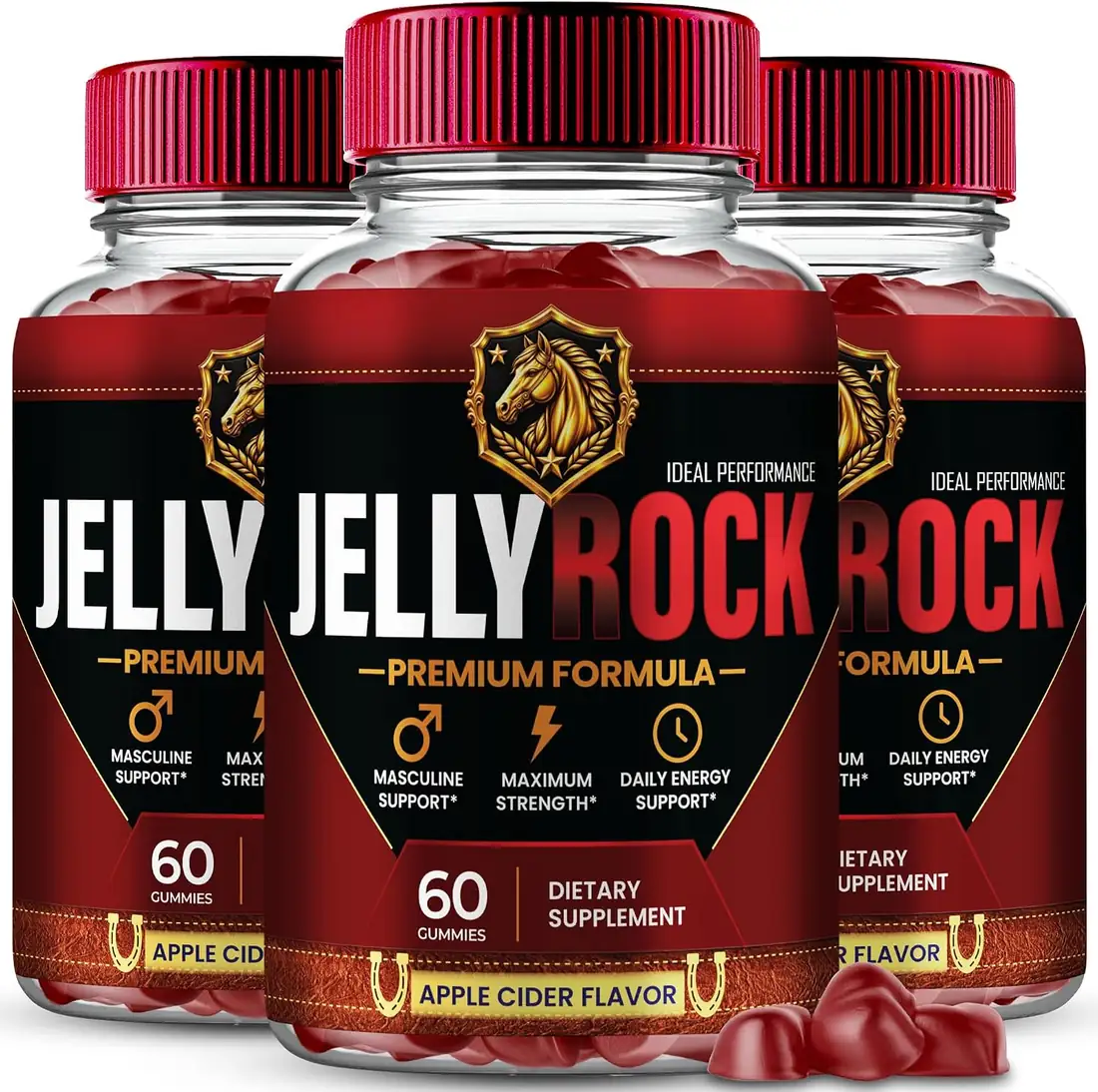
Ready to start JellyRock?
Choose a pack and the checkout shows your price. Returns follow the Amazon window unless the seller prints a longer one. Need help first? The contact page lists each desk.
Sold by a U.S. stocking partner for JellyRock, not the maker; this site is paid when you order.More to read about JellyRock
Apple cider vinegar in a gummy
Two JellyRock gummies carry a 1,000 mg apple cider vinegar complex. See how it stacks up a…
Read more →How B vitamins relate to energy
Can B vitamins lift your energy? See the roles of B6, B12 and folate, who tends to run low…
Read more →What goes into JellyRock
Apple cider vinegar, iodine, B vitamins and a pair of trace powders.
Read more →