VitaminVitamin B6
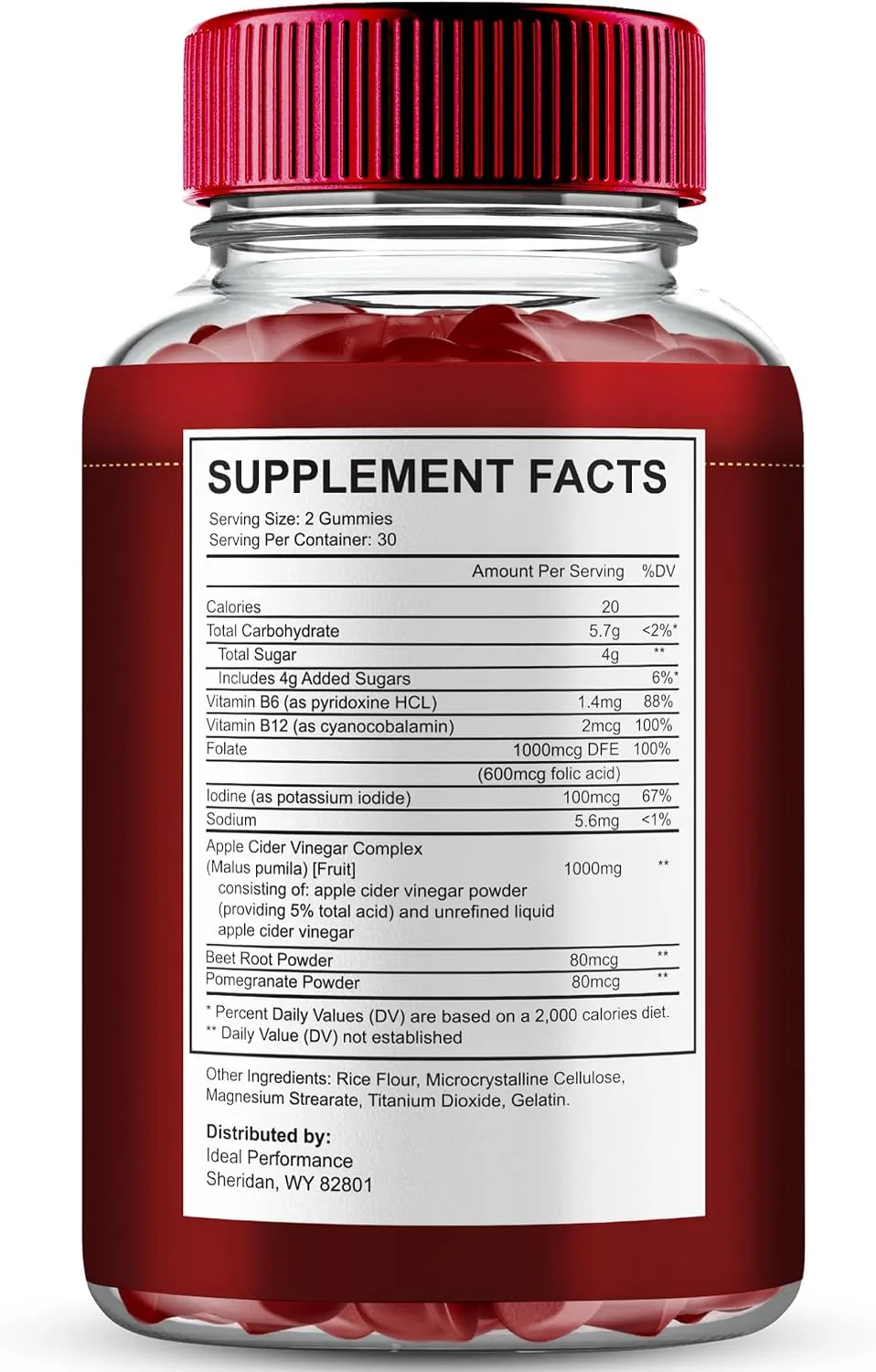
1.4 mg in each 2-gummy serving · as pyridoxine HCl
- Pyridoxine hydrochloride, the usual form in supplements.
- Supports enzymes that break down protein and build neurotransmitters and red blood cells.
- Daily need: 1.3 mg for adults 19–50, 1.7 mg for men over 50. Upper limit: 100 mg.
- The label shows 88% DV; divided by the 1.7 mg Daily Value, the amount comes to roughly 82%.
Keep in mind: Nerve issues appear only when very large doses (often above 100 mg) are taken over long periods, and 1.4 mg sits well under that. Reference: NIH Office of Dietary Supplements, “Vitamin B6: Fact Sheet for Health Professionals”.
VitaminVitamin B12
2 mcg in each 2-gummy serving · as cyanocobalamin
- Cyanocobalamin, the form supplements use most.
- Your red blood cells and nerves depend on it; too little B12 brings tiredness and weakness.
- Adults require 2.4 mcg daily, with no upper limit set.
- Shown as 100% DV, yet it is nearer 83% once you divide by the 2.4 mcg Daily Value.
Keep in mind: This amount carries very little risk. Low levels are more common in people over 50, in vegans, and in anyone taking metformin or acid reducers. Reference: NIH Office of Dietary Supplements, “Vitamin B12: Fact Sheet for Health Professionals”.
VitaminFolate
1,000 mcg DFE in each 2-gummy serving · supplied as 600 mcg folic acid
- 600 mcg of folic acid, which equals 1,000 mcg DFE.
- Used to build DNA and red blood cells.
- Against a 400 mcg DFE Daily Value, that is 250%, rather than the 100% on the jar.
- Folic acid from supplements has a 1,000 mcg upper limit, and one serving uses 60% of it.
Keep in mind: Large amounts of folic acid can mask the anemia of low vitamin B12 while nerve damage goes on. Let your health care provider know you take it. Reference: NIH Office of Dietary Supplements, “Folate: Fact Sheet for Health Professionals”.
MineralIodine
100 mcg in each 2-gummy serving · as potassium iodide
- Potassium iodide.
- Iodine lets your thyroid make its hormones, and those set the pace of your metabolism.
- The adult daily need is 150 mcg, with an upper limit of 1,100 mcg.
- The thyroid is the only “hormonal” connection we could find on the label, and it has nothing to do with testosterone.
Keep in mind: Anyone with a thyroid condition, or on thyroid medicine, should check with a health care provider before starting. Reference: NIH Office of Dietary Supplements, “Iodine: Fact Sheet for Health Professionals”.
Food extractThe apple cider vinegar complex
1,000 mg in each 2-gummy serving · ACV powder (5% total acid) and unrefined liquid ACV, from Malus pumila fruit
- Powdered apple cider vinegar (5% total acid) mixed with unrefined liquid apple cider vinegar.
- 1,000 mg equals 1 gram, and a tablespoon of liquid vinegar is roughly 15 grams.
- Research here is limited to small, brief studies of after-meal blood sugar and body weight, and the results were modest.
- Vinegar is not linked to testosterone or male vitality.
Keep in mind: Being acidic, it may irritate your throat and wear down tooth enamel. In bigger amounts it may interact with diuretics, insulin and certain heart medicines. Reference: Mayo Clinic, “Apple cider vinegar for weight loss: Does it work?”.
Trace (0.08 mg)Powdered beet root
80 mcg in each 2-gummy serving · Beta vulgaris
- Dried beet root.
- Because beet juice contains nitrate, researchers study it for exercise and blood flow.
- The juice in that research delivers hundreds of milligrams of nitrate.
- Here, 80 mcg of powder is only a tiny share of that.
Keep in mind: This amount raises no concern.
Trace (0.08 mg)Powdered pomegranate
80 mcg in each 2-gummy serving · Punica granatum
- Dried pomegranate fruit.
- Studies of pomegranate juice and extracts use grams or hundreds of milligrams.
- 80 mcg counts as a trace.
- More a name on the label than a working dose.
Keep in mind: This amount raises no concern.